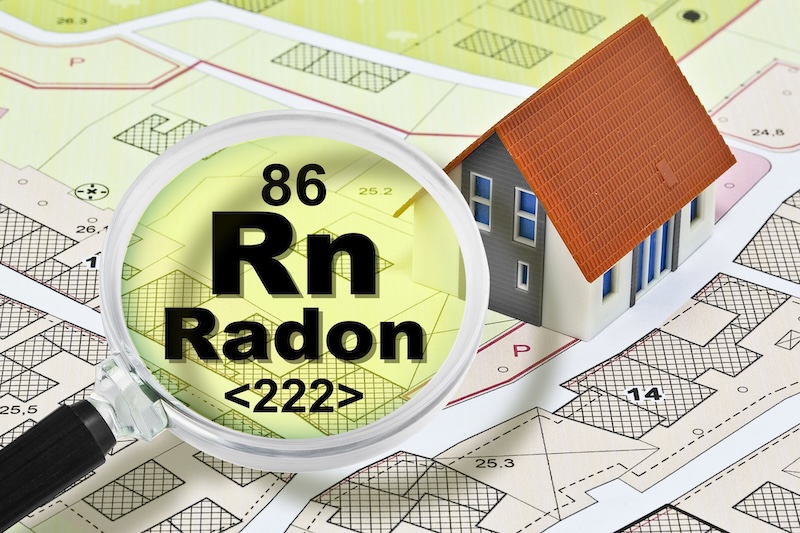
Radon is the second leading cause of lung cancer in the United States, responsible for an estimated 21,000 deaths annually, and the vast majority of homeowners have never tested for it. It’s colorless, odorless, and completely undetectable without testing. It can be present at dangerous levels in a home that looks, smells, and feels completely normal. Radon testing is the only way to know whether this naturally occurring radioactive gas is accumulating in your home to levels that pose a serious health risk.
Why Radon Testing Matters More Than Most Homeowners Realize
Radon forms naturally from the decay of uranium in soil and rock. It rises through the ground and enters homes through foundation cracks, construction joints, and gaps around service pipes, and once inside a tightly sealed modern home, it accumulates. The EPA’s action level is 4 picocuries per liter (pCi/L). Approximately one in fifteen homes exceeds this level, and elevated radon has been found in homes in every state. The deceptive aspect of radon is that nothing about a home’s appearance, location, or construction type reliably predicts its radon levels. A well-built new construction home can have elevated levels. A drafty older home might not. The geology beneath the home is the primary determinant. The only way to know your home’s radon level is to test.
Professional Radon Testing: What the Process Involves
Professional radon testing performed by a qualified home inspector or certified radon measurement professional provides the most reliable results available. When added to a home inspection, radon testing is straightforward, the inspector deploys testing equipment at the start of the inspection period and retrieves it after the required exposure time, with results typically available within a few days. Continuous electronic monitors are the most common professional choice because they record radon levels over time and detect conditions during the test period that might affect result validity. Closed-house conditions are required during short-term radon testing; windows and doors must remain closed except for normal entry and exit. These conditions accurately reflect typical occupancy and prevent artificially low readings from excess ventilation.
Radon Mitigation: What Happens When Testing Reveals Elevated Levels
When radon testing results exceed 4 pCi/L, mitigation is the recommended response. The good news is that it’s well-established, highly effective, and typically far less disruptive and expensive than most homeowners anticipate. The most common mitigation method is sub-slab depressurization, PVC pipes inserted through the foundation slab, connected to a small fan that draws radon-laden air from beneath the home and vents it safely outside. A properly installed system typically reduces indoor radon levels by 50 to 99 percent. Installation is usually completed in a single day by a licensed mitigation contractor.
After mitigation, follow-up radon testing confirms the system is performing as intended. Most reputable contractors include post-mitigation testing as part of their service. Ongoing annual testing is a reasonable maintenance standard for any home with a mitigation system, ensuring it continues to perform effectively.
Frequently Asked Questions (FAQs)
How long does professional radon testing take?
Professional radon tests run a minimum of 48 hours under closed-house conditions, with most real estate-related tests running 48 to 96 hours. When added to a home inspection, the inspector typically places the continuous monitor at the beginning of the inspection period. Results are usually available within a few days of test retrieval.
What radon level is considered dangerous?
The EPA recommends taking action when levels reach or exceed 4 pCi/L, and suggests considering mitigation between 2 and 4 pCi/L. The average indoor radon level in the United States is approximately 1.3 pCi/L, compared to an outdoor average of about 0.4 pCi/L.
Do I need radon testing even if my neighbor tested and came back fine?
Yes. Radon levels vary significantly between adjacent properties and even between floors of the same home. Geology beneath properties can vary enough over very short distances to produce dramatically different results in neighboring homes.
Does radon testing need to happen before closing, and who is responsible for arranging it?
Radon testing should be completed during the due diligence period, the same window as the home inspection, so results are available before the buyer is contractually committed to the purchase. In most transactions, the buyer arranges and pays for radon testing. Scheduling radon testing at the same time as the home inspection is the most efficient approach.
How much does radon mitigation typically cost, and does it affect home value?
Mitigation for a typical residential property generally costs $800 to $2,500, depending on foundation type, size, and the number of suction points required. A properly installed and documented mitigation system does not negatively affect home value. A home with a functioning system and documented post-mitigation results below the action level is often viewed favorably by informed buyers as evidence that the issue has been professionally addressed.
Robertson Home Inspection offers inspection services in the Piedmont Triad area of North Carolina. Contact us to schedule an appointment.