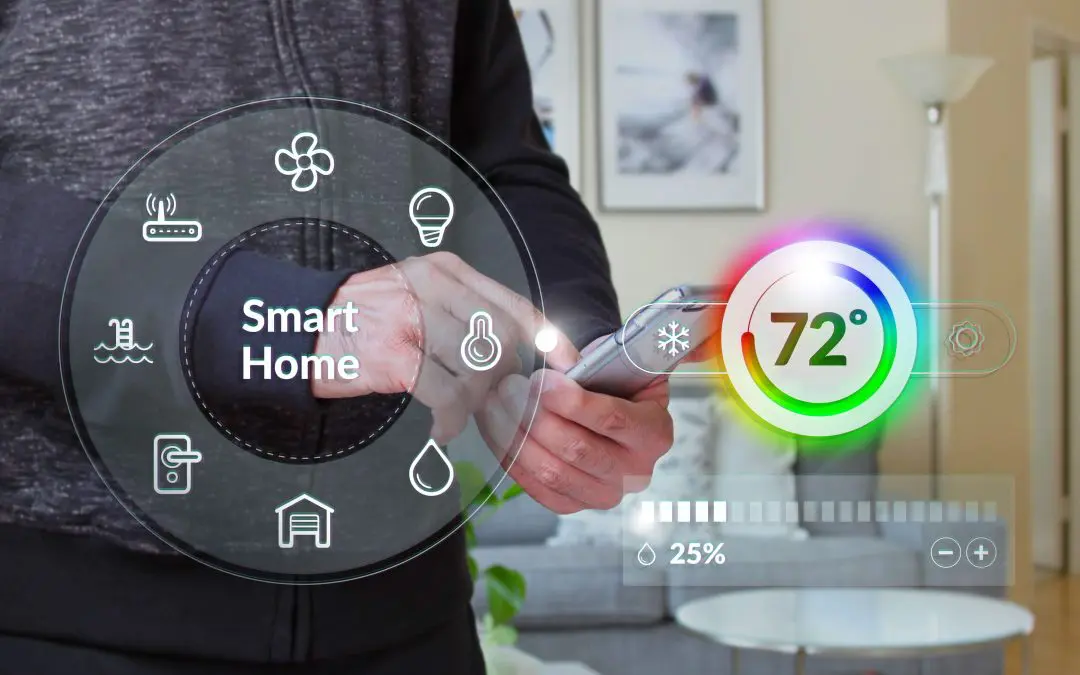
Home technology emerging now is fundamentally different than previous options: systems that learn, adapt, and anticipate rather than simply respond to commands. A system that responds to commands is a convenience. One that learns your patterns, optimizes your energy use, monitors your environment, and surfaces information you didn’t know to ask for is something closer to a genuinely intelligent living environment. Understanding what’s available is what helps homeowners make good decisions in a market full of options.
The Home Technology That’s Actually Changing Daily Life
The home technology investments that produce the most meaningful daily impact operate continuously in the background rather than requiring deliberate interaction. The best systems are the kind you stop noticing because it works so reliably it becomes indistinguishable from the environment itself. Thermostats represent the clearest example. First-generation smart thermostats required scheduling. Current-generation learning thermostats build an occupancy and preference model from the first weeks of use and continuously refine it. They know when the home is typically occupied, at what temperatures different household members are comfortable, and how to pre-condition the space so it reaches the target temperature at the right moment rather than when someone notices discomfort. The result is genuinely better comfort at meaningfully lower energy cost because the system figured it out.
Whole-home energy management systems are the home technology category that produces the largest financial impact over time. These systems integrate solar panels, battery storage, smart electrical panels, and EV charging management, optimizing the flow of energy through the home in real time based on utility rate structures, battery state, solar production, and anticipated demand. As time-of-use electricity pricing becomes more widespread, these systems become increasingly valuable.
Health-Focused Technology That Monitors the Indoor Environment
Indoor air quality monitoring has evolved from single-sensor units that report particulate levels to comprehensive systems that continuously track VOC concentrations, carbon dioxide, humidity, temperature, and allergen levels. A home technology system that activates enhanced filtration when outdoor particulate levels spike due to wildfire smoke is doing something no amount of manual attention would accomplish as effectively. Circadian lighting systems, which automatically adjust the color temperature and intensity of interior lighting throughout the day to support the body’s natural light-based rhythms, are moving from commercial and clinical applications into residential home technology. Warm, dim light in the evening transitioning to cooler, brighter light in the morning isn’t just a mood feature; it measurably affects sleep quality, alertness, and mood.
The Integration Layer: Making Home Technology Work Together
The most significant challenge in residential home technology isn’t the individual devices; it’s making them work together coherently. The Matter protocol, a universal connectivity standard backed by Apple, Google, Amazon, and Samsung, represents the most meaningful development in home technology interoperability in years. Devices built on Matter can communicate across platforms, meaning a homeowner is no longer locked into a single ecosystem. A thermostat, a security camera, and lights from different manufacturers operate within the same system and share data to make smarter collective decisions. This interoperability transforms a collection of smart devices into a genuinely integrated home technology system that functions as more than the sum of its parts.
Frequently Asked Questions (FAQs)
What is the best starting point for upgrading technology in an existing home?
The highest-impact starting points are systems that run continuously: the thermostat and the lighting. A learning thermostat produces immediate, measurable energy savings with minimal installation complexity. Smart lighting that adjusts color temperature throughout the day affects mood, sleep quality, and energy use in ways that accumulate meaningfully over time.
How does AI-powered technology differ from standard smart home devices?
Standard smart home devices respond to commands or schedules: they do what they’re told, when they’re told. AI-powered technology learns from patterns, adapts to changing conditions, and makes proactive decisions without being explicitly instructed. The difference is the shift from reactive to anticipatory behavior.
Is whole-home energy management technology worth the investment?
For homeowners with solar panels, battery storage, or EV charging, or those planning to add any of these, whole-home energy management is increasingly worth the investment. The system pays for itself through optimized energy use and battery dispatch management in ways that manual management could never replicate.
What is the Matter protocol and why does it matter for home technology?
Matter is a universal interoperability standard that allows smart home devices from different manufacturers to work together within any compatible platform. Before Matter, smart home devices were often locked to specific ecosystems, limiting what homeowners could build without committing to a single brand. Matter-certified home technology devices communicate across platforms, giving homeowners genuine flexibility to build integrated systems from the best products in each category rather than settling for whatever one manufacturer offers.
How do I protect my privacy when using connected home technology?
Privacy protection starts with the network: a secure router with strong encryption, regularly updated firmware, and a guest network that isolates IoT devices from computers containing sensitive data. Review privacy policies of home technology manufacturers to understand what data is collected and whether it’s shared with third parties. Use strong, unique passwords and two-factor authentication on every home technology account. The most privacy-protective stance is to choose home technology from manufacturers with strong privacy track records and minimize devices with active listening or camera capabilities.
Robertson Home Inspection offers inspection services in the Piedmont Triad area of North Carolina. Contact us to schedule an appointment.